I write about where the wild meets the American West and how that current flows through history, story, and image. I’m especially interested in how the Western, on the page and on the screen, has shaped the ways Americans have imagined and sought to preserve wild country.
My forthcoming book, Saving the Wild Country: Five Visionary Environmentalists and the Struggle for Nature in the American West (Yale University Press), tells the story of how Ansel Adams, David Brower, Wallace Stegner, Nancy Newhall, and Edward Abbey fought to define and defend the meaning of wilderness in the modern West. It will be published early next year.
On the horizon is Lonely Are the Brave: Kirk Douglas, Edward Abbey, and the Making of the Modern Western, my next book. I’m writing it for Bison Books, the western trade imprint of the University of Nebraska Press.
I am a professor of environmental history, philosophy, and conservation at Arizona State University, and an Active Member of the Western Writers of America.
Forthcoming & Recent Books
~Releasing in January~
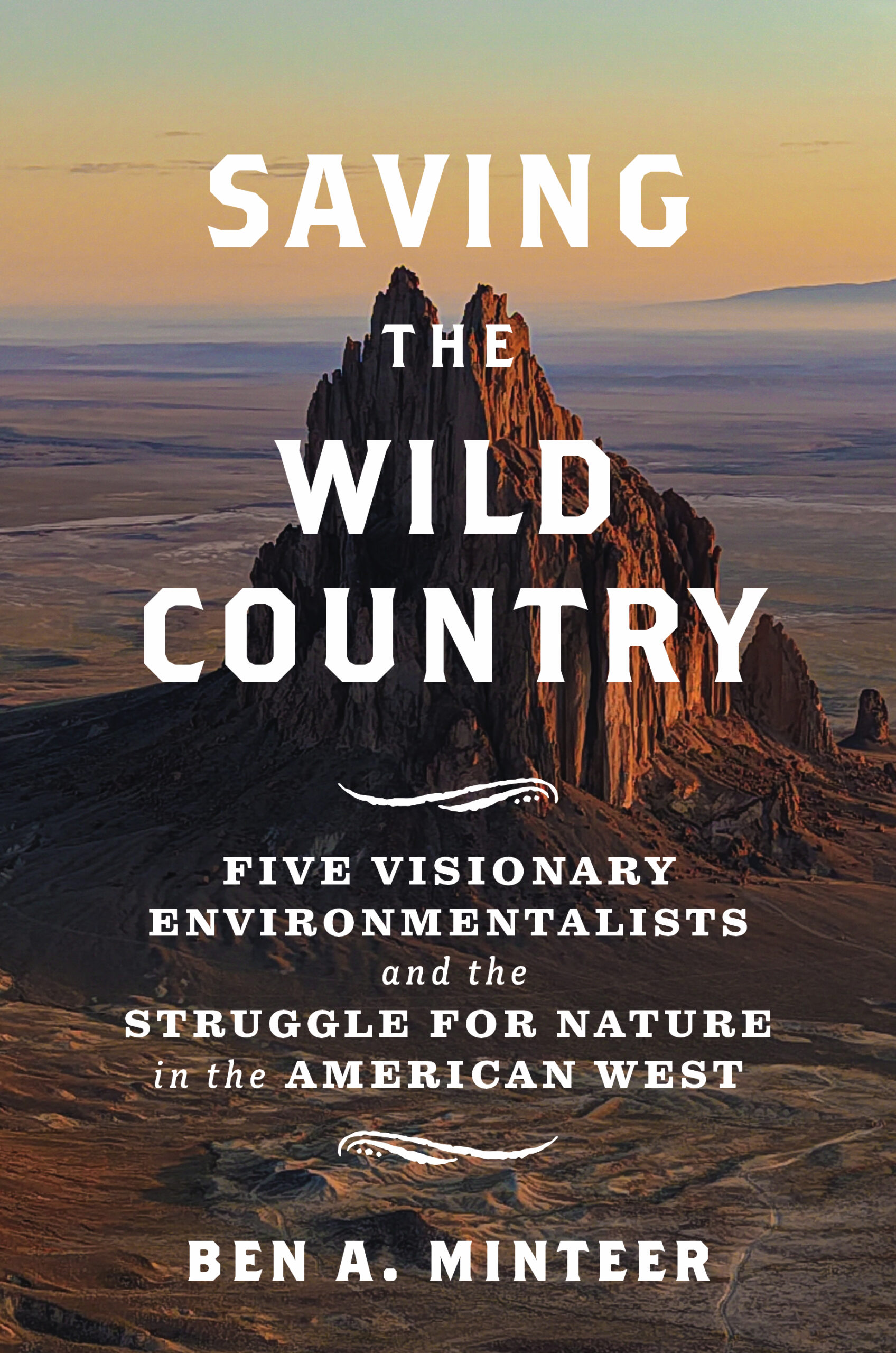
The gripping story of the trailblazing conservationists who shaped the wilderness of the American West into legend
Driven by richly drawn characters and framed by cinematic showdowns in epic landscapes, Saving the Wild Country vividly combines narrative history, biography, cultural criticism, and outdoor writing to show how postwar wildland advocacy—and the Western myth—shaped American attitudes toward wilderness in a time of ferocious development and change.
In the boom years following World War II, a small but vital group of artists, writers, and advocates mobilized the visual and therapeutic power of the wilderness to combat the dizzying development of the American West.
With cinematic flair, Saving the Wild Country explores the motives and achievements of photographer Ansel Adams, conservationist David Brower, curator and writer Nancy Newhall, and authors Wallace Stegner and Edward Abbey, an ensemble united by a fierce commitment to preserving the American wildlands. Through a burst of creative projects, they struggled to control the narrative of development in the American West and offered an alternative vision to the culturally corrosive impacts of mid-twentieth-century industrialism and consumerism. But as the five visionaries fought the dams, bulldozers, and highways that slashed across the wild country, they also fought among themselves—and with their internal doubts and regrets—in a land where personality, myth, and activism collided.
Praise
“Informative, entertaining, and inspiring, Ben Minteer’s marvelous story of legendary conservationists will keep you turning pages. His imaginative portraits of Nancy Newhall and Robert Redford alone are worth the price of admission.”
—Mark Fiege, author of The Republic of Nature: An Environmental History of the United States
“Minteer’s compelling environmental history shows how the Western tapped our admiration for the untamed hero as an argument for saving wild places where you could still feel like one.”
—Jordan Fisher Smith, author of Engineering Eden: A Violent Death, a Federal Trial, and the Struggle to Restore Nature in Our National Parks
“Ben Minteer provides fresh portraits of five essential figures in the American wilderness movement. In tracing their complicated lives and meaningful legacies, he brings them back into our current conversations on the value of the wild.”
—Curt Meine, author of Aldo Leopold: His Life and Work
“The West, the Wild, the Western in print and film—Ben Minteer deftly weaves them all with the lives of five people who notably shaped our appreciation of America’s wilderness.”
—Stephen J. Pyne, author of The Pyrocene: How We Created an Age of Fire, and What Happens Next
“In 1967 Yale University Press published the first edition of my book, Wilderness and the American Mind. Six decades later, Ben Minteer extends and deepens the discussion. He skillfully roots his environmentalist ‘Wild Bunch’ in the popular culture that gave them prominence.”
—Roderick Frazier Nash
~Coming in paperback this October~
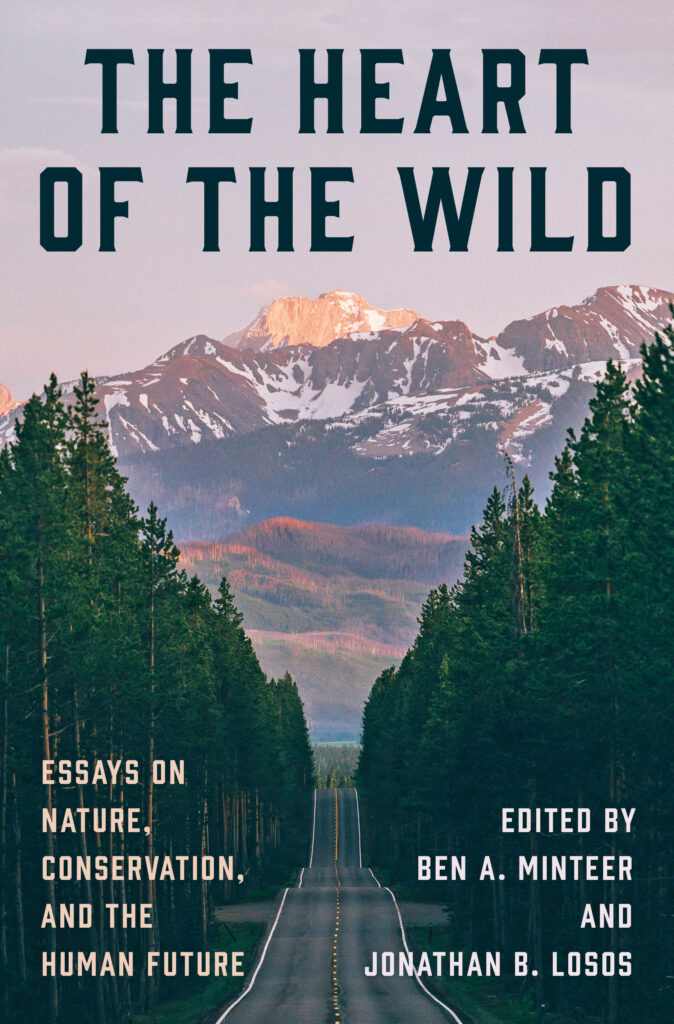
The Heart of the Wild brings together some of today’s leading environmental scholars, scientists, and nature writers to offer a thought-provoking meditation on the urgency of learning about and experiencing our wild places in an age of rapidly expanding human impacts.
These engaging essays present nuanced and often surprising perspectives on the meaning and value of “wildness” amid the realities of the Anthropocene. They consider the trends and forces—from the cultural and conceptual to the ecological and technological—that are transforming our relationship with the natural world and sometimes seem only to be pulling us farther away from wild places and species with each passing day. The contributors make impassioned defenses of naturalism, natural history, and nature education in helping us to rediscover a love for the wild at a time when our connections with it have frayed or been lost altogether.The Heart of the Wild brings together some of today’s leading scientists, humanists, and nature writers to offer a thought-provoking meditation on the urgency of learning about and experiencing our wild places in an age of rapidly expanding human impacts.
The Heart of the Wild brings together some of today’s leading scientists, humanists, and nature writers to offer a thought-provoking meditation on the urgency of learning about and experiencing our wild places in an age of rapidly expanding human impacts.
These engaging essays present nuanced and often surprising perspectives on the meaning and value of “wildness” amid the realities of the Anthropocene. They consider the trends and forces—from the cultural and conceptual to the ecological and technological—that are transforming our relationship with the natural world and sometimes seem only to be pulling us farther away from wild places and species with each passing day. The contributors make impassioned defenses of naturalism, natural history, and nature education in helping us to rediscover a love for the wild at a time when our connections with it have frayed or been lost altogether.
Praise
“The scientists, humanists, and nature writers whose essays grace this book present subtle, though sometimes striking, differences in defining the term wild. Their thought-provoking essays not only convey the complexities involved—the tensions among preservation, rewilding, and human access—but often surprise with their unconventional attitudes and perspectives. Yet each essayist seems to share a conviction that having a scientific grasp of the perils facing our planet is incomplete without forging a moral and emotional bond with it.”
—Kirkus Reviews
“A provocative but closely reasoned argument for including the human element in any discussion of the wild.”
—Bill Thompson, The Post and Courier
“Falling in love with the world around us—a world from which we’re too often abstracted and distant—may be the first crucial step toward saving some of that creation. The essays in this book, from some of the wisest and most eloquent voices on the planet, should summon us to this vital work.”
—Bill McKibben, editor of American Earth: Environmental Writing since Thoreau
“This richly reflective book alerts us that conserving nature’s diversity will take more than political will and conventional pieties. It will take some sharper thinking. We can’t honor or save the ‘heart’ of the ‘wild’ until we better understand, and agree more broadly upon, what those two words might mean.”
—David Quammen, author of The Song of the Dodo and Breathless
“The Heart of the Wild is a wonderful collection—a rich conversation that challenges orthodoxies, makes unexpected connections, and reminds us of the value of even the humblest forms of life.”
—Michelle Nijhuis, author of Beloved Beasts
Foreword by Roderick Frazier Nash
Our ideas of the wilderness have evolved dramatically over the past one hundred and fifty years, from a view of wild country as an inviolable “place apart” to one that exists only within the matrix of human activity. This shift in understanding has provoked complicated questions about the importance of the wild in American environmentalism, as well as new aesthetic expectations as we reframe the wilderness as (to some degree) a human creation.
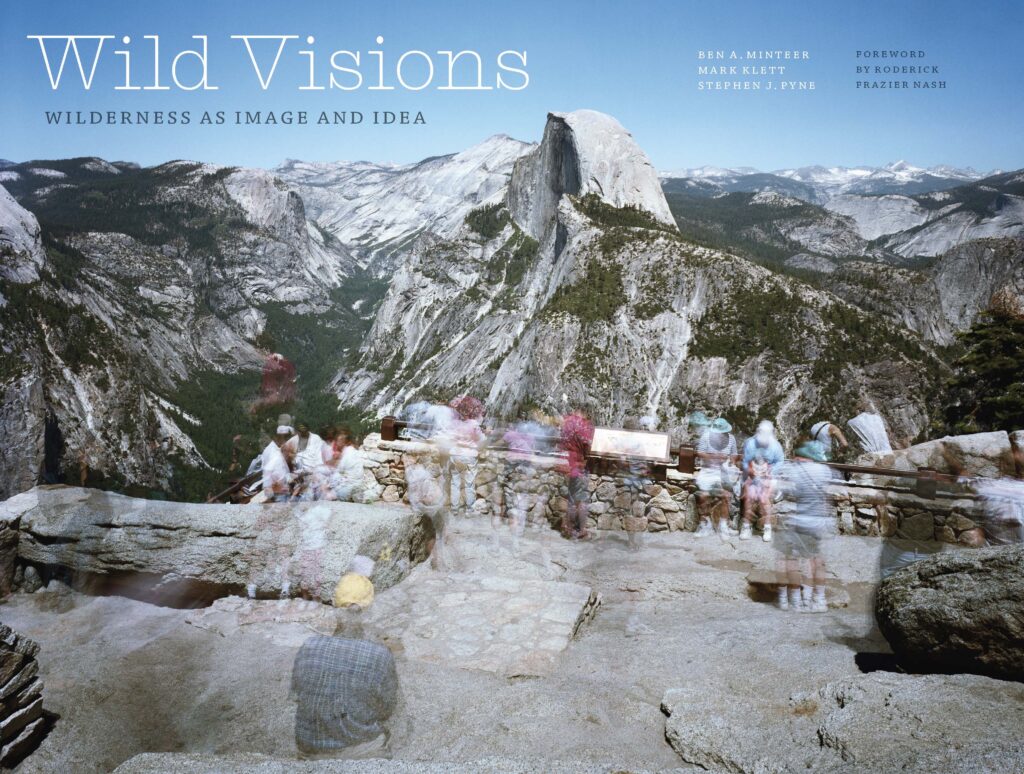
Wild Visions: Wilderness as Image and Idea (Yale University Press) is distinctive in its union of landscape photography and environmental history, a merging of short, thematic essays with a striking visual narrative. Often, the wild is viewed in binary terms: either revered as sacred and ecologically pure or dismissed as spoiled by human activities. This book portrays wilderness instead as an evolving gamut of understandings, a collage of views and ideas that is still in process.
The volume was developed in collaboration with photographer Mark Klett and historian Steve Pyne. It’s inspired in part by the “exhibit format” series popularized by David Brower during his tenure as executive director of the Sierra Club in the 1960s. Wild Visions employs this classic photographic essay format to consider the continuity and change in these traditional American views and images of the wilderness, taking stock of the swirl of changing representations, values, narratives, and faces of the places we call wild in the 21st century.
Praise
“A thought‑provoking and informative exploration of the idea of wilderness in the U.S. It is a pleasure to see so much smart photography, across multiple generations of production, gathered in one volume.”
—Rebecca A.Senf, author of Making a Photographer: The Early Works of Ansel Adams
“Wild Visions is not simply a compilation of landscape photographs, but an argument for the power of imagery to enhance our evolving understanding of wilderness and its preservation, something peculiar to the identity and values of Americans.”
—Laura McPhee, author and photographer, River of No Return
“In essays, dialogues, and photographs, this eloquent book circles through historically shifting definitions of the word “wilderness.” The authors draw on their lives in the American West and decades of analysis to challenge our perceptions.”
—Anne Wilkes Tucker, author of The Woman’s Eye